The Tree Swallows have been hunting insects in the meadow, swirling overhead and then off into the nesting box. Great news! They must have a nest!
But, wait, a House Sparrow followed it into the nesting box?
Did I see this correctly? What was going on? I dashed inside and did a quick search of Tree Swallows versus House Sparrow and this is what I found out:
House Sparrows are over 80,000,000 strong here in the U.S. and counting. Also known as English Sparrows, they were introduced from Great Britain 150 years ago and they are NOT a native bird. They are extremely aggressive and will corner Tree Swallows, Blue Birds, and other native birds, who they are competing with, following them into a nesting box and pecking them to death. Yikes!
This is the picture shown on the site listed below:
http://www.treeswallowprojects.com/spardam.html
Shocked and disturbed, I raced to the nesting box to investigate. I found 5 baby House Sparrow inside, which I left in place and they are thriving. I was relieved not to find a dead Tree Swallow.
What was going on in the rest of the nesting boxes? These are nesting boxes that had been erected specifically to help the Blue Bird population in the area!
The nesting box by the fence, historically, always a Blue Bird nesting box, had House Sparrows and 4 eggs. Out that nest came! The Blue Birds had been over wintering in this box all winter and had clearly been chased off.
In the upper meadow, 2 of the nesting boxes housed House Sparrow nests. Out they came. The middle nesting box have a Blue Bird family nesting and they were already being harassed by House Sparrows.
What to do? The site above offers some great suggestions, which I will pursue, including a Sparrow Spooker and Hironbec Pendulum.
Here is the site to access this information: http://www.hironbec.com/ENbicolorefiche.htm
Another outstanding site offers further suggestions on how to deal with this serious problem:
http://www.sialis.org/hosp.htm
Before acting, be sure to make a correct ID:
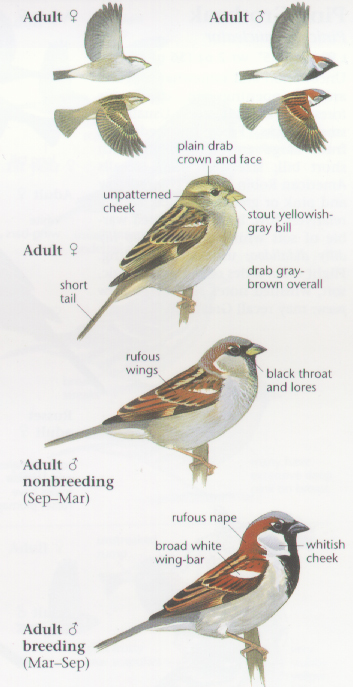
http://www.swartzentrover.com/cotor/Photos/Hiking/Birds/BirdPages/HouseSparrow.jpg
Egg comparisons for making correct ID:
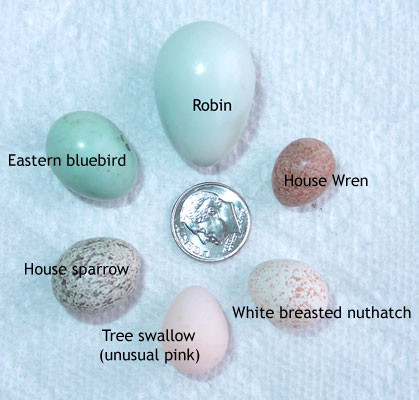
I will continue to monitor these nesting boxes and remove House Sparrow nests every 10-12 days, as recommended.
Thursday, May 5, 2016
Sunday, May 1, 2016
Eggs of Blue
Along the driveway, there were 2 small, broken, very blue eggs.
Why? Why along the driveway?
Was the robbing bird using the hard surface to help break the eggs?
Why not just use their pointy beak?
Whose eggs were these?
They seemed smaller than a robins?
Which other birds lay blue eggs with no markings or spots and are smooth?
Using Peterson's Field Guide: Eastern Bird's Nest, this is what I found:
From small to large:
14 x 11 mm - blue-gray gnatcatcher - pale - bluish, bluish white
18 x 13 mm - house finch - pale bluish green
20 x 16 mm - bluebird - pale blue, bluish white
22 x 16 mm - veery - pale blue, similar to robins
22 x 16 mm - hermit thrush - very pale blue
23 x 17 mm - gray catbird - deep greenish blue
25 x 18 mm - wood thrush - pale blue
28 x 20 mm - robin - robin egg's blue
29 x 21 mm - common starling - pale bluish or greenish white
Here is an online site for egg and nest identification:
http://thebirdersreport.com/egg-and-nest-identification
In measuring the egg, it is around 28 mm and with it's distinct blue, it's most likely a robin's egg.
Friday, April 29, 2016
Spring Discoveries
It is a blustery, damp, dreary, cold Spring day. It's hard to believe, that it's the end of April. Despite the cold, there are some interesting discoveries, that have been awaiting me in the garden.
First Discovery/Confirmation:
Look what was sparkling amongst the weeds:
First Discovery/Confirmation:
Look what was sparkling amongst the weeds:
Raspberry Dressing Lettuce!!
This is a keeper and something I will be sure to plant yearly!
Second Discovery/Confirmation:
- The zinnia bed covered in old zinnia stocks did well. Just a few weeds, but overall the soil is in place and in excellent shape. The left over seeds were enjoyed by the over-wintering birds, as well.
- The beds covered in black plastic are in great shape, although the soil was more compacted and reduced. In any case, the soil is like black chocolate cake: moist, crumbly and deliciously perfect for planting new spring plants.
- The beds covered in weed barrier did not fare well. The barriers were not anchored well enough and simply blew away. Those beds are covered in weeds. Argh! (See previous post on October 25, 2015)
Spring plantings are well underway. I've planted red, romaine and bibb lettuces and parsley plants and pea seeds and mounded starter potatoes. I threw in a tomato and some eggplant just for fun, but it's been too cool for them to make much progress.
Sunday, March 20, 2016
Snapper crossing!
Last Thursday afternoon, March 10th, 2 female snapper turtles journeyed from the lower boreal pond and creek, over the road, to the upper pond, where they will reside until the end of summer. It was in the 60's, sunny with a light breeze.
This is the first year in 10 years, that I have witnessed 2 traveling not only on the same day, but at the same time.
The first female followed almost the exact same path as last year, traveling
It's a difficult and dangerous trip, as they must cross over a busy road.
That's where I come in!
This is the first year in 10 years, that I have witnessed 2 traveling not only on the same day, but at the same time.
The first female followed almost the exact same path as last year, traveling
up from the creek still covered in thick, wet, black mud.
and onto my neighbors driveway and then over the road, where
I stopped traffic, so she could cross safely.
After crossing the road and safely on the other side, she allowed me to approach her closely without hissing. I could then appreciate her large muscular legs and long claws as she hurried along
with an ungainly stride.
The second snapper came straight from the pond, through the leaves, vines and branches.
Slowly, she made her way, inching across the driveway and then lumbering up the hill.
As I collected sticks from the winter's winds and keeping my distance, I noticed she continued to choose the most difficult path.
She walked into some brambles and became tangled in an old wire fence, that took me,
and some pulling, while wearing thick protective gloves, to get her out.
Finally, I just carried her the rest of the way, over the road,
as she wiggled and snapped at me.
I'm so glad to have discovered them,
to insure their safe travels over the road
for another season!
For previous snapper turtle encounters, see blog entries:
May 7, 2010:
November 20, 2009:
Thursday, March 17, 2016
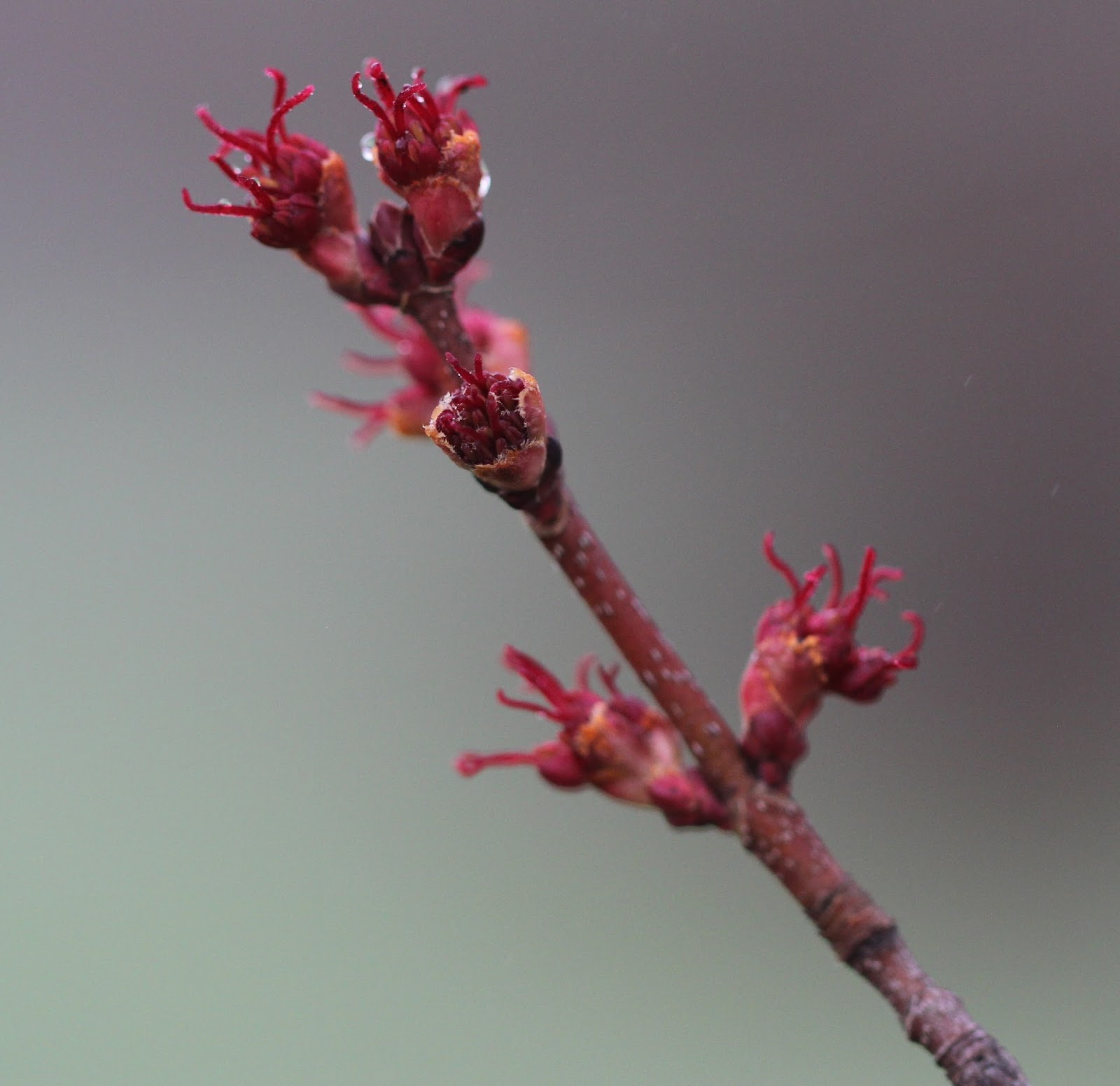
Spring buds
Buds, which are helpful in identifying plants and trees, come in many shapes and types, including: scaly, covered, hairy and naked, as this chart shows beautifully:
Spring is on the way and many buds are popping on this cool, foggy morning.
(https://en.wikipedia.org/wiki/Bud#/media/File:Plant_Buds_clasification.svg)
Magnolia: hairy, covered, terminal
Plum: covered and dew kissed
Red maple: scaly, rounded
Crabapple: scaly
Blueberry: scaly
unidentified: scaly and rounded
Friday, February 12, 2016
Recent Headers
Tuesday, February 9, 2016
Winter Storm Jonas
Starting late January 22 and through the evening of the 23rd, we were hammered with wind and lots and lots of snow - over 30" in just 24 hours. The largest snow fall the area has seen in over 20 years. Surprisingly, there were no power outages in our area.
Here are some photos to mark the event:
Birds took shelter in the nearby trees and grabbed a bite to eat.
Here are some photos to mark the event:
Birds took shelter in the nearby trees and grabbed a bite to eat.
It was a quick moving storm and followed
by brilliant sunshine and blue skies for days afterwards.
Subscribe to:
Posts (Atom)