The Tree Swallows have been hunting insects in the meadow, swirling overhead and then off into the nesting box. Great news! They must have a nest!
But, wait, a House Sparrow followed it into the nesting box?
Did I see this correctly? What was going on? I dashed inside and did a quick search of Tree Swallows versus House Sparrow and this is what I found out:
House Sparrows are over 80,000,000 strong here in the U.S. and counting. Also known as English Sparrows, they were introduced from Great Britain 150 years ago and they are NOT a native bird. They are extremely aggressive and will corner Tree Swallows, Blue Birds, and other native birds, who they are competing with, following them into a nesting box and pecking them to death. Yikes!
This is the picture shown on the site listed below:
http://www.treeswallowprojects.com/spardam.html
Shocked and disturbed, I raced to the nesting box to investigate. I found 5 baby House Sparrow inside, which I left in place and they are thriving. I was relieved not to find a dead Tree Swallow.
What was going on in the rest of the nesting boxes? These are nesting boxes that had been erected specifically to help the Blue Bird population in the area!
The nesting box by the fence, historically, always a Blue Bird nesting box, had House Sparrows and 4 eggs. Out that nest came! The Blue Birds had been over wintering in this box all winter and had clearly been chased off.
In the upper meadow, 2 of the nesting boxes housed House Sparrow nests. Out they came. The middle nesting box have a Blue Bird family nesting and they were already being harassed by House Sparrows.
What to do? The site above offers some great suggestions, which I will pursue, including a Sparrow Spooker and Hironbec Pendulum.
Here is the site to access this information: http://www.hironbec.com/ENbicolorefiche.htm
Another outstanding site offers further suggestions on how to deal with this serious problem:
http://www.sialis.org/hosp.htm
Before acting, be sure to make a correct ID:
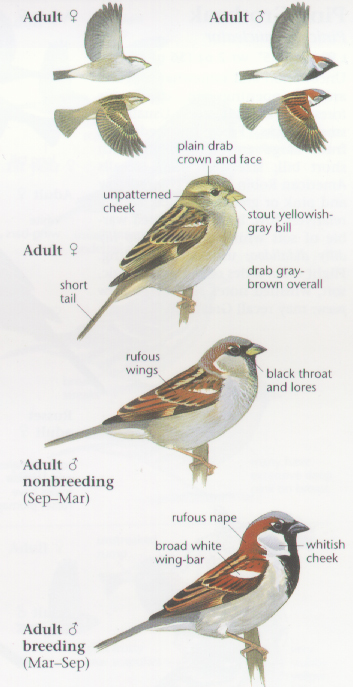
http://www.swartzentrover.com/cotor/Photos/Hiking/Birds/BirdPages/HouseSparrow.jpg
Egg comparisons for making correct ID:
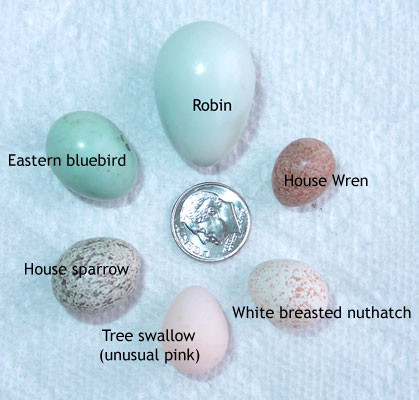
I will continue to monitor these nesting boxes and remove House Sparrow nests every 10-12 days, as recommended.
Showing posts with label nesting box. Show all posts
Thursday, May 5, 2016
Sunday, May 1, 2016
Eggs of Blue
Along the driveway, there were 2 small, broken, very blue eggs.
Why? Why along the driveway?
Was the robbing bird using the hard surface to help break the eggs?
Why not just use their pointy beak?
Whose eggs were these?
They seemed smaller than a robins?
Which other birds lay blue eggs with no markings or spots and are smooth?
Using Peterson's Field Guide: Eastern Bird's Nest, this is what I found:
From small to large:
14 x 11 mm - blue-gray gnatcatcher - pale - bluish, bluish white
18 x 13 mm - house finch - pale bluish green
20 x 16 mm - bluebird - pale blue, bluish white
22 x 16 mm - veery - pale blue, similar to robins
22 x 16 mm - hermit thrush - very pale blue
23 x 17 mm - gray catbird - deep greenish blue
25 x 18 mm - wood thrush - pale blue
28 x 20 mm - robin - robin egg's blue
29 x 21 mm - common starling - pale bluish or greenish white
Here is an online site for egg and nest identification:
http://thebirdersreport.com/egg-and-nest-identification
In measuring the egg, it is around 28 mm and with it's distinct blue, it's most likely a robin's egg.
Tuesday, February 3, 2015
Birdhouse Upkeep!
It's time to clean out birdhouses before new nesting begins and replace old worn out homes. It is important to remove old nesting material to reduce disease and parasite infestation.
The 8 year old birdhouse's roof had rotted through and is being replaced here above with a copper roofed home, which last longer. This home had been used by swallows all last summer.
I traveled around to the different homes to see if I could find clues of who had been nesting this past year and what kind of materials were being used to build the nests.
Up at the top of driveway, at the crest of the hill, is birdhouse #1, which is usually used by bluebirds. When I went to open it, a bluebird can flying out. I left the nest in place, as we have many cold days ahead. It is common for bluebirds to pile up and roost in birdhouses to stay warm, as pictured here:
I was surprised to see a mockingbird feather in here, too. The hole has been made larger and is a well used nesting box. I'll go back in a few weeks and remove the nest then.
On the east side of the upper meadow is birdhouse # 2, where there are several layers of nesting material. On the top of the pile was a male northern cardinal feather, perhaps used for decoration, as I have never see cardinals use this box. There were, also, numerous white, grey and brown feathers. I have seen many sparrows nesting here.
On the southeastern side of upper meadow, shaded by evergreens, which explain the moss growing on top, is birdhouse #3.
The nest includes plastic material, a few feathers, and soft plant material. There were bluejay feathers present.
The last nesting box, #4, is on the eastern corner of the fence and was replaced at the end of summer but is still not in use. The old birdhouse had fallen apart and was a
favorite nesting spot for bluebirds.
We hope they return.
We look forward to the coming spring, filled with many new bird families!
Labels:
birdhouse,
Bluebird,
bluejay,
mockingbird,
nesting,
nesting box
Subscribe to:
Posts (Atom)


