Showing posts with label migration. Show all posts

Wednesday, May 16, 2018

2018 - Year of the Bird: Our amazing sightings, Part I


Between the winter storms, there were many wonderful beautiful bird sightings.


To end 2017 on a very cold December 31, at the feeder there were northern cardinals, a Hairy woodpecker, juncos, house finch, titmice and on the spruce by the window, a white throated sparrow:


Also, that afternoon, a large flock of Cedar waxwings descended on our Winterberry bushes.


On January 4th, during one of our icy snow storms, the Serviceberry tree was adorned with brillant male Northern cardinals with a couple of females in tow as well as some Tufted titmice and Blue jays.


Late in the morning on a clear 50 degree January 20th, a small group of Sandhill Cranes flew in and milled about the meadow looking for food for a few hours. It was a rare sighting and they lingered in the area for weeks. We were fortunate to see them up close and personal.


March brought 3 major winter storms and weeks in between of very cold and dreary weather. During that time, a pair of bluebirds regularly used the bird feeder, often with the male holding watch, as the female ate. A White breasted nuthatch also can be seen here on March 28th!


A small deer carcass lay in the side meadow and was found quickly by our local vultures, who fed on it for days as well as by the resident fox on April 3rd.


After the Northeasters, spring winds brought our first ever seen here Eastern phoebes on April 7 in the late afternoon. They caught my attention, as they were flying actively around the deer in the lower meadow, who were kicking up some flying insects. They were diving in and around the deer, who were also curious about them, approaching them to smell them. 


A couple of days later, a pileated woodpecker was seen on a fallen willow tree stump down by the stream.

With warmer temperatures in May, trees are finally bursting with leaves, flowers are blooming, insects are emerging and migratory birds are moving north. Returning back after a long walk, Lilli caught sight of a squirrel which gave me pause to notice a very red bird flying back and forth above me next to the vernal pond. At first glance, I thought it was a Northern cardinal, but then quickly noticed that it had black wings - a Scarlet tanager! I thought he was just hoping back and forth, curious about me, but more likely he was trying to get the attention of a nearby female.


I have binoculars ready and looking forward to seeing more exciting birds, 
this Year of the Bird!


Monday, September 4, 2017

Skipping Sachems

It's mid-afternoon, sunny, warm and breezy and numerous Sachems (Atalopedes campestris) are migrating through, counting about 25 in the last 45 minutes. They dart from flower to flower, sometimes with 2 or 3 fighting for a flower and then zooming off to the other side of the garden and then back again.

They are part of the great family, Skippers, and are in a small Genus, Polites Scudder of just 10 species, all in North America, 6 occurring in the East and only 2 with ranges that extend beyond the US. Most of them are small, orange and black and have short antennae.

The dark wings and transparent square spots at the end help identify 
this beautiful female Sachem. 


Set against a colorful backdrop of zinnias, a Sachem Skipper inserts 
its proboscis quickly into the flower 


  down deep, obtaining nectar for it's long flight,


 and then back out again.


 The large black dot on the forewing of this handsome skipper identifies the male Sachem. 


Only a little over an inch long, this little guy, froze and then 
slowly stuck his proboscis at me.


The chevon on the outer upper wing, also is commonly seen in Sachem Skippers. 


They are headed down South, passing over southern US, through Mexico and mainland tropical America to Brazil, where they will overwinter.

Peterson Field Guide, Eastern Butterflies, 1998.


Sunday, January 18, 2015

To Feed Birds or Not?


In recent conversations and on various blog posts, I have noticed an increase in the discussion of artificial bird feeding and backyard bird feeding.

I enjoy feeding birds and watching them come to the feeders, especially during the winter months.  I have always felt I was giving them a leg up during these challenging cold months, when there is less food available for those who stay year round.

Or am I?

So, I decided to explore the topic to see what the research shows.

From the Bird Watcher's Digest article, "Does Bird Feeding Affect Bird Behavior", here are some key points summarized:

a. Raptors use bird feeders as personal feeding stations. They may do "short-stopping" rather than carry out their full migration if there is "an abundance of prey at bird feeders".

We often have a cooper's hawk that frequents the feeder area.


b. Bird feeders have increased the northern expansion of northern cardinals, tufted titmice, mourning doves and others.

I can attest to this - we have a thriving population of all of these species in the winter.

c. Several scientific studies have shown that there are "nutritional and reproductive benefits for bluejays, black-capped chickadees and tufted-titmice" that breed in the area of the bird feeders.

d. In general, birds do NOT need the extra food, but it serves as a "fast-food" outlet in times of food shortages.

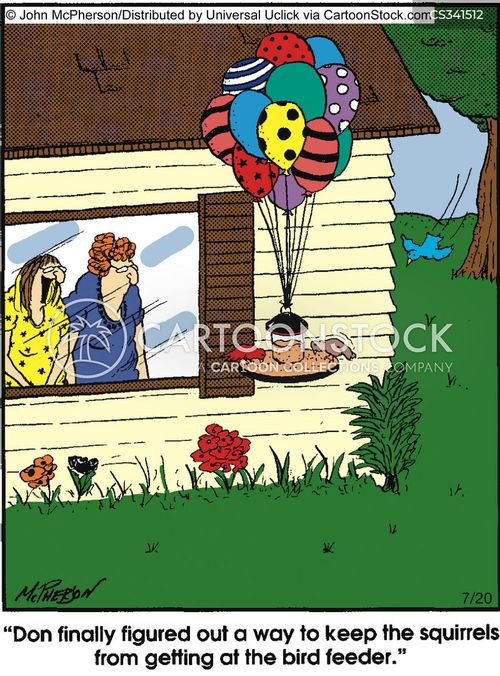
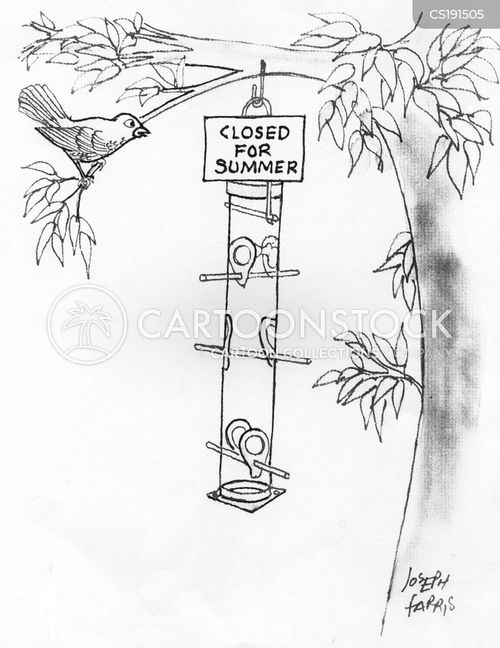
e. It does increase the local squirrel populations, unless action is taken to discourage them, such as using a squirrel proof feeder, as shown here:


or this


f. Increased disease transfer is possible, if the feeders are not kept clean. It is noted, though, that birds do often feed in mixed-species flocks anyways.

g. If you decide to feed, you must be consistent, as birds come to depend on it and change their feeding habits, especially during storms and other critical times.

To read the complete story, see:
http://www.birdwatchersdigest.com/bwdsite/learn/feeding/does-feeding-affect-behavior.php

According to the article, "Artificial Bird Feeding: What we don't know", studies conducted in the UK regarding artificial feeding, have found that Great and Blue Tits lay their eggs earlier and have a shortened incubation period. Surprisingly, they may also have smaller clutches and lower hatching success.

Also, artificial feeding may cause evolutionary changes, as seen with the Black Caps in the UK, splitting up into a new species, with one migrating normally and the other migrating only a short distance. A positive outcome for those birds, who overwinter, is being closer to their breeding grounds. (http://www.metrofieldguide.com/artificial-bird-feeding-what-we-dont-know/)

In conclusion, in trying to find a middle ground, I think, feeding during the hardest winter months
of January through March would be beneficial for our local birds.


Wednesday, September 10, 2014

Positive Monarch Fall Migration Update!

I have been keeping a close eye out for monarchs all summer. There has definitely been an uptick of adult monarchs passing through in the past 2 weeks here in Doylestown and also down at 
Cape May, NJ with fall migration having officially started. 
I never spotted any eggs or larvae on our milkweed.

(http://images.nationalgeographic.com/wpf/media-live/photos/000/006/cache/monarch-butterfly_630_600x450.jpg)

I was curious what others were seeing. I visited Journey North's migration maps and found this: http://www.learner.org/jnorth/maps/monarch_all_fall2014.html

According to Journey North, as of September 4th, over 13 roosts, with one having as many as 500 individual butterflies, have been observed. There had been only 2 reported at this time last year. There are many more adults being seen on the move and Dr. Chip Taylor of Monarch Watch predicts the population to be twice as large as last year.


Join the party 
and report your sightings 
by logging in here: 

Monday, July 7, 2014

Unexpected Common Milkweed Expansion


(Picture from Washington Post)

Monarch butterfly populations have been in steady decline since 2003 caused in part by loss of habitat. The director of the organization, Monarch Watch, created a recovery plan which includes the planting nationwide of thousands of milkweed, the primary host of monarchs. The organization has shipped over 30,000 milkweed plants, see blog article: http://monarchwatch.org/blog/)
Although, this is a very important issue to me, I never made the time over the winter to order milkweed to increase the numbers we already have.

This spring, I was pleasantly surprised to find that the mowing of our upper meadow after 3 years stimulated the small patch of Common Milkweed, that had already been growing in our meadow. Common Milkweed is the most prolific of the 12 native milkweeds in PA and is also know as Asclepias syriaca.

Our Milkweed have expanded to several patches and now includes roughly 1000 healthy individual plants.


Here is a simple map showing the location and expansion of the Milkweed in the upper meadow, which covers about 2 acres. The lower meadow is largely wetlands and has very little Milkweed.


Milkweed spread via seeds carried by the wind, birds or animals or by rhizomes underground. The mowing probably exposed fertile ground for the seeds and stimulated the rhizomes.

Milkweeds' milky sap contain poisonous glycosides, which the monarchs feed upon and can tolerate and in turn gives it the protection it needs from predators. Milkweeds' nectar and pollen are free of these poisons and provide food for numerous bees, butterflies and other insects.


It's well after May, and I have not spotted any monarchs coming through still. 

Here is a map of the first adult sightings for North America through June 20th:

The milkweed are blooming, mature and ready. Hopefully, the monarchs will show up soon.