Showing posts with label birding. Show all posts

Sunday, February 12, 2017

Birdhouses Closed for Business

Before the birds begin making their selection for new birdhouses for the season, we chose this grey, cold, wet day to get the houses cleaned out.


Some interesting finds and observations included:

> One nest had a prominent blue jay feather featured, although it hadn't been used by one:


> Three plumb mice promptly jumped out as we removed the thick nesting material, jumping wildly into the air, practically onto us, but landed in the snow below and scurried away:


Another house, at the top of the property and usually used by bluebirds, had a small, very messy, loosely built nest made of small twigs and moss. It looked like it must have been very uncomfortable for baby birds:


We have never seen this type of nesting materials in this birdhouse before. Perhaps, it was a Carolina Wren's, Northern Mockingbird's, or Great Crested Flycatcher's nest? 

Northern mockingbird nests are composed of a lot of twigs, and seem to resemble the nest we found the best.

(Photo: http://4.bp.blogspot.com/)

As we made our way back to the meadows, we flushed out a very wet Coppers Hawk, who routinely can be seen here, by the vernal pond:


The newest birdhouse hasn't been used recently and was completely free of bird nesting material:


The birdhouses will all be left wide open this year to hopefully break the cycle of house sparrows using them.


Every bird is on their own for the nesting season this year!

Sunday, January 24, 2016

Winter Buffet

During the winter, birds struggle to find food, shelter and water. You can help by planting a variety of plants, shrubs, vines, grasses and trees that provide berries, seeds and nuts for them throughout the winter. These plants provide not only food rich in calories, nutrients and antioxidants for the birds, but also, beauty, texture and interest for you, as well.

Here are some to consider:

Shrubs:
1. Viburnums such as Cranberry Viburnum (Viburnum trilobum)
2. Staghorn sumac (Rhea typhina)
3. Northern Bayberry (Myrica pensylvanica)
4. Native roses
5. Winterberry (Ilex verticilatta)

Vines:
1. Virginia Creeper (Parthenocissus quinquefolia)

Trees:
1. Oaks (Quercus)
2. Walnut (Juglans)
3. Hickory (Carya)
4. Eastern Red Cedar (Juniperus virginiana)
5. Spruces (Picea)
6. Juniper (Juniperus)
7. Dogwood (Cornus)
8. Holly (Ilex)
9. Hawthorn (Crataegus)

The Green Hawthorn, Winter King,  is a beautiful, pyramid shaped, small tree with small thorns, which has beautiful white flowers in the spring, brilliant red purplish leaves in the autumn and scarlet berries in the winter. 

I have a Green Hawthorn right outside my window, which makes for easy viewing and photographing. In the course of just a couple of hours, I captured 6 different bird species feeding. 

In order for the berries to become soft and edible, they need to go through a few freeze-thaw cycles. 

Here is a robin gobbling down a berry:


A female northern cardinal is finding an abundance of berries on the ground: 


A dark-eyed junco rests and takes shelter after a satisfying meal:


 This cedar waxwing flew in briefly. I hope he tells his friends.


On a neighboring pear tree, a red-bellied woodpecker peeks at all the activity:


The resident blue birds are seen daily on this tree,


including these 2 juvenile blue birds, who stopped by to check out all the commotion:


Another blue bird dives in to partake:


A large flock of robins have lingered for over a week, enjoying the feast daily:


To check which plants are best suited for your area, this website can provide the answers
you need, organized by plant or by state:
http://plants.usda.gov/checklist.html

Sunday, January 18, 2015

To Feed Birds or Not?


In recent conversations and on various blog posts, I have noticed an increase in the discussion of artificial bird feeding and backyard bird feeding.

I enjoy feeding birds and watching them come to the feeders, especially during the winter months.  I have always felt I was giving them a leg up during these challenging cold months, when there is less food available for those who stay year round.

Or am I?

So, I decided to explore the topic to see what the research shows.

From the Bird Watcher's Digest article, "Does Bird Feeding Affect Bird Behavior", here are some key points summarized:

a. Raptors use bird feeders as personal feeding stations. They may do "short-stopping" rather than carry out their full migration if there is "an abundance of prey at bird feeders".

We often have a cooper's hawk that frequents the feeder area.


b. Bird feeders have increased the northern expansion of northern cardinals, tufted titmice, mourning doves and others.

I can attest to this - we have a thriving population of all of these species in the winter.

c. Several scientific studies have shown that there are "nutritional and reproductive benefits for bluejays, black-capped chickadees and tufted-titmice" that breed in the area of the bird feeders.

d. In general, birds do NOT need the extra food, but it serves as a "fast-food" outlet in times of food shortages.

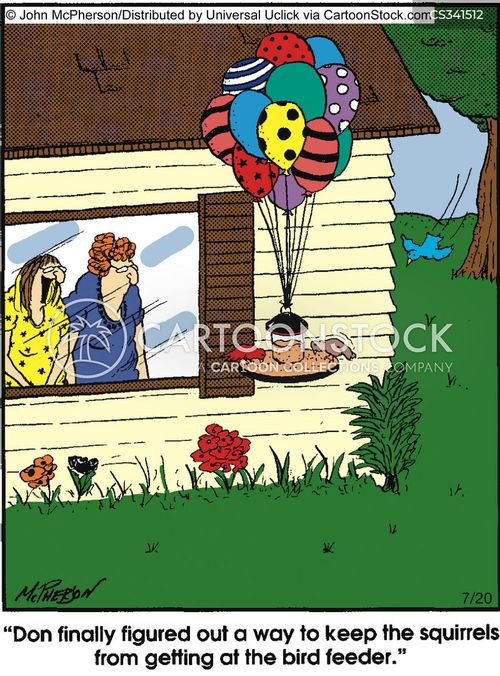
e. It does increase the local squirrel populations, unless action is taken to discourage them, such as using a squirrel proof feeder, as shown here:


or this


f. Increased disease transfer is possible, if the feeders are not kept clean. It is noted, though, that birds do often feed in mixed-species flocks anyways.

g. If you decide to feed, you must be consistent, as birds come to depend on it and change their feeding habits, especially during storms and other critical times.

To read the complete story, see:
http://www.birdwatchersdigest.com/bwdsite/learn/feeding/does-feeding-affect-behavior.php

According to the article, "Artificial Bird Feeding: What we don't know", studies conducted in the UK regarding artificial feeding, have found that Great and Blue Tits lay their eggs earlier and have a shortened incubation period. Surprisingly, they may also have smaller clutches and lower hatching success.

Also, artificial feeding may cause evolutionary changes, as seen with the Black Caps in the UK, splitting up into a new species, with one migrating normally and the other migrating only a short distance. A positive outcome for those birds, who overwinter, is being closer to their breeding grounds. (http://www.metrofieldguide.com/artificial-bird-feeding-what-we-dont-know/)

In conclusion, in trying to find a middle ground, I think, feeding during the hardest winter months
of January through March would be beneficial for our local birds.


Thursday, August 1, 2013

Dove Love, Part 2

After the first nesting cycle, the female was wooed by another suitor.


Her mate takes notice, tries to reel her in, by chasing and circling her. He succeeds and she sits down in place. 


He then chases off the intruder as she watches on.


He then races back to her, 


reunites and reasserts himself, ruffles his feathers and woos her.


She accepts and acknowledges him by grooming in unison.


They face one another, with him providing a ruffled display as she sits down submissively.


He feeds her, 


then mounts her and they mate.


Tuesday, December 11, 2012

Hidden Treasure Found

After 3 trips for bows to decorate the fence, finally I was at the end on this cold, wet, foggy morning.


What to find, but a beautifully constructed robin's nest, which had been hidden all summer by the surrounding woody vines -


Beyond the fence, it is delightful to see in bloom on this dreary day, Purple Beautyberry (Callicarpa dichotoma)


Around the corner, I re-discovered the old bird house in need of repair or replacement, which the blue birds used all summer


and above appeared suddenly in the thick fog, geese in formation, preceded by their calls -


Thursday, August 23, 2012

Breakfast with a Heron

Out of the corner of my eye, 
there was a flurry of movement
and I turned just in time to see
 a Great Blue Heron 
descend gently into the back yard. 

The blue ball in the pool must have captured his attention. 


He stayed for a few minutes to investigate. 
My dashing for the photo probably scared him away. 

Tuesday, February 28, 2012

A Wintry Bluebird Kind of Day

Over the weekend, 
we had very blustery weather and even some swirling snow showers.
Oh, how I have missed the snow this year.


Tucked out of the wind, a shy blue bird greeted us first thing in the morning. He was knocking at the window trying to come in.


He took one look at us though and dashed away, but then returned, perhaps because he enjoyed the break in wind he had found or perhaps, was curious about us. He did this for hours and provide us delightful entertainment.


He reminded me of a cheerful little book from my daughter, 
called "The Bluebird of Happiness" 


and this quote, 
"This is the best day the world has ever seen. Tomorrow will be better."

You can't help but smile, when you see a bluebird.

Monday, February 20, 2012

Our Observations and Results for the Great Backyard Bird Count!

For the past 2 days, John and I have been observing birds and taking notes for the Great Backyard Count. We revisited a few pointers for identification such as with the woodpeckers, the Downy Woodpecker has a short beak, white back and black dots on the white outer section of the tail whereas the Hairy Woodpecker, which looks very similar, is bigger and has a longer beak. Can you figure out which one is which from these amazing illustrations from online?

Then, for the iridescent black birds. The European Starlings are smaller and compact with short tails and yellow beaks this time of year and usually fly in quick moving flocks whereas the Common Grackle is larger with a long keel-shaped tail and dark beak. Which one is which?


Finally, here are the results of our Great Backyard Bird Count:

Locality: 18901, Doylestown, Bucks County, PA
Observation Date: FEB 19, 2012
Email: shiverjh2002@yahoo.com
Start Time: 9:30 AM
Snow Depth: No snow was present
Total Birding Time: 4 hours
Location Type: Yard
Party Size: 2
Skill: good
Weather: good
Habitat(s):
deciduous woods
rural
Number of species: 14
All Reported: no
SpeciesCount
Turkey Vulture3
Red-tailed Hawk1
Mourning Dove3
Red-bellied Woodpecker1
Downy Woodpecker1
Blue Jay3
American Crow3
Carolina/Black-capped Chickadee2
European Starling12
Song Sparrow3
Dark-eyed Junco13
Northern Cardinal3
Common Grackle3
House Finch1

There is still one more day to observe. Wow, I see a Northern Flicker on the feeder. Got to go!


Monday, February 13, 2012

Partake in the Great Backyard Bird Count!


This coming weekend, starting February 17 and running 4 days until February 20, is the annual

Great Backyard Bird Count. 

The site listed below provides a data form and list of birds for your area.

Have fun and happy birding!

http://www.birdsource.org/gbbc/