Wednesday, April 1, 2015

Review of Winter 2014/15

Now that Spring is here and starting to actually feel like it, with temperatures climbing tomorrow finally into the 60's, it's time to review this past winter's weather. 

It was not about snow totals, but more winter weather events and below average cold temperatures.

Lacking my own records, here is what I found using Accuweather data:

Winter 2014-2015 Winter Events 
Doylestown, PA
Date of Event
snow
ice
Notes
November 13
0.5”


November 26, Thanksgiving Storm
2”
x
travel impacts to the south
January 3-4

x

January 6
1”
x

January 9
0.3”


January 12

x

January 18

x

January 21
0.5”
x
black ice/ accidents
January 24
5”


January 26-27 - Blizzard
4.5”

NE with 20-35” and 50-80+ mph winds
February 1
0.5”


February 5
0.1”


February 12
0.1”
x

February 14, Valentine’s storm
2.5”

50+ mph winds
February 15
0.8”
x

February 17
3”
x

February 21-22
3”


March 3
1.5”


March 5
8.3”

heavy snow
March 20
3.5”

wet, heavy snow

TOTALS


37.1”


20 events

Here are the snow total comparisons for Philadelphia for the last 2 years:

NOAA Snow Totals Comparisons for Philadelphia
for Winters 2013/14 and 2014/15
Winter months
2013/14
2014/15
November
T
T
December
11.2
0.1
January
25.9
4.3
February
22.4
10.6
March
8.5
12
April
T
T
TOTALS
68”
27”


It was, also, about the below average temperatures:

Winter stats for Winter of 2013-2014


While searching, I found some other great weather information sites: 

At the NOAA site, they provide monthly data: http://sercc.com/nowdata.html; 

These blogs and sites provide excellent maps and stories: https://www.facebook.com/easternpaweatherauthority

Jeff Master's Blog from Wunderground: 

Current results provides averages: 

Weatherworks offers great insights, maps, and blog: http://www.weatherworksinc.com/

In conclusion, we had over 20 events with final snow accumulations yielding only 37" for Doylestown and 27" for Philadelphia, but with well below average temperatures of 14-16 degrees, causing more ice related issues. Last year, there were only 11 events with 68" of snow. 

A finally look at Winter's end and last dates for expected snowfalls. It looks like we are in the clear!


Friday, February 6, 2015

Brotherly Love!

Although the rutting season has passed, the males are still sparring, like these two young males.


This sparring is more for sizing each other up and practicing. Full out dominance fighting is seen more with bucks over 3.5 years old and with bucks from outside their range, where it can turn quite violent.

These young bucks are probably 2.5 years old, as their antlers are even with their ears.

This week, we had three larger males, who are at least 3.5 years old, in the area, grazing together.


One male was off to himself,


while the other two were very friendly and affectionate with each other and even licking one another.


Usually the subordinate male licks the face and forehead gland of the recognized dominate male, which usually occurs before or after a sparring match.

Note their dark stained tarsal glands inside their back legs.

Except during rutting season, males usually spend time together throughout the year, away from the females, who can be bossy.

I wonder if these are the twins from July of 2011?


Tuesday, February 3, 2015

Birdhouse Upkeep!

It's time to clean out birdhouses before new nesting begins and replace old worn out homes. It is important to remove old nesting material to reduce disease and parasite infestation.


The 8 year old birdhouse's roof had rotted through and is being replaced here above with a copper roofed home, which last longer. This home had been used by swallows all last summer.

I traveled around to the different homes to see if I could find clues of who had been nesting this past year and what kind of materials were being used to build the nests.

Up at the top of driveway, at the crest of the hill, is birdhouse #1, which is usually used by bluebirds. When I went to open it, a bluebird can flying out. I left the nest in place, as we have many cold days ahead. It is common for bluebirds to pile up and roost in birdhouses to stay warm, as pictured here:


I was surprised to see a mockingbird feather in here, too. The hole has been made larger and is a well used nesting box. I'll go back in a few weeks and remove the nest then.


On the east side of the upper meadow is birdhouse # 2, where there are several layers of nesting material. On the top of the pile was a male northern cardinal feather, perhaps used for decoration, as I have never see cardinals use this box. There were, also, numerous white, grey and brown feathers. I have seen many sparrows nesting here.


On the southeastern side of upper meadow, shaded by evergreens, which explain the moss growing on top, is birdhouse #3.


 The nest includes plastic material, a few feathers, and soft plant material. There were bluejay feathers present.


The last nesting box, #4,  is on the eastern corner of the fence and was replaced at the end of summer but is still not in use. The old birdhouse had fallen apart and was a 
favorite nesting spot for bluebirds. 


We hope they return. 

We look forward to the coming spring, filled with many new bird families!

Friday, January 30, 2015

In Hot Pursuit!

It has been a very active rutting season this year, starting in early November. On a rainy, dreary, cold day, we caught sight of a large buck in pursuit of a doe, that lasted over an hour.


What was remarkable is that the doe actually hid from him in the meadow. 

As the buck was rampaging around, she ran to the meadow and ducked down. After he had slowly searched for her in the meadow, walking right by her, he eventually gave up and left. 


She then raised up very slowly and carefully looked around. 


When she felt she was in the clear, she then slowly walked away, looking attentively all around her the entire way.

Also, surprising, was that a young buck suddenly emerged from the meadow shortly after she left, running away from all the action.  Clearly, he was steering clear of the dominate male, too. 


The next morning the dominate male had settled down and had paired with a female, 
who was eating nearby.

Although the photos are not sharp, as I was shooting through tinted windows, I still wanted to share these interesting observations of deer interactions and behavior. 

Friday, January 23, 2015

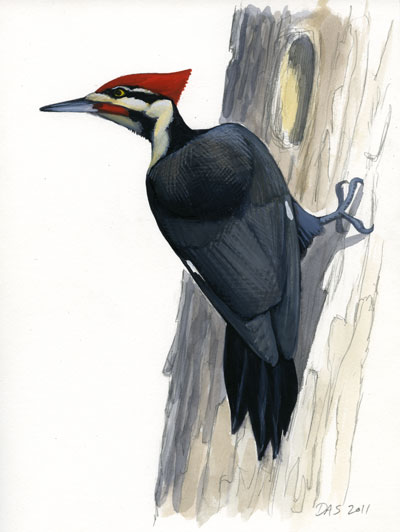
Pileated Woodpecker's Short Visit!

On January 21, loud drumming and calls from the woods, attracted my attention. It was a sound I was familiar with, but I had not heard since my childhood.

Could it be a Pileated Woodpecker?

I dashed outside to get a closer look. There it was, hopping and flying from tree to tree enthusiastically with it's bright red crest. What a wonderful surprise, as I have never seen one in this area.


Later in the afternoon, it flew overhead, going East, to another part of the neighborhood. 

Unfortunately, I haven't seen or heard it again. 

Thursday, January 22, 2015

Who's coming to dinner?

On dreary and cold Sunday, January 18, with pouring and freezing rain and 27 degrees, we had over 12 different species visit our backyard feeder in just an hour, between 10 and 11:00 a.m. This is even with the main bird feeder not filled.


Here is the breakdown, including visits to the feeder. I've counted visits rather than number of different birds feeding, as it's hard to determine if it's a different bird each time.

Dark-eyed Junco - 13 visits
Song sparrow - 1
Tufted titmouse - 22
House sparrow - 5
Mourning dove - 6
Black-capped chickadee - 4
Carolina wren - 1
White-breasted nuthatch - 4
Northern cardinal - 4
Northern flicker - 1
Downy woodpecker - 2
Red-bellied woodpecker - 3

It definitely is the day for the Tufted titmice, who hung around, eating, even grooming at the feeder. The Juncos spent additional time on the ground feeding throughout the hour. They were not bothered by other visitors. The Woodpeckers came within a few minutes of each other and really filled up. In the hour, only the Tufted titmouse used the squirrel-proof feeder. By in large, the birds don't like feeding from it.


Sunday, January 18, 2015

To Feed Birds or Not?


In recent conversations and on various blog posts, I have noticed an increase in the discussion of artificial bird feeding and backyard bird feeding.

I enjoy feeding birds and watching them come to the feeders, especially during the winter months.  I have always felt I was giving them a leg up during these challenging cold months, when there is less food available for those who stay year round.

Or am I?

So, I decided to explore the topic to see what the research shows.

From the Bird Watcher's Digest article, "Does Bird Feeding Affect Bird Behavior", here are some key points summarized:

a. Raptors use bird feeders as personal feeding stations. They may do "short-stopping" rather than carry out their full migration if there is "an abundance of prey at bird feeders".

We often have a cooper's hawk that frequents the feeder area.


b. Bird feeders have increased the northern expansion of northern cardinals, tufted titmice, mourning doves and others.

I can attest to this - we have a thriving population of all of these species in the winter.

c. Several scientific studies have shown that there are "nutritional and reproductive benefits for bluejays, black-capped chickadees and tufted-titmice" that breed in the area of the bird feeders.

d. In general, birds do NOT need the extra food, but it serves as a "fast-food" outlet in times of food shortages.

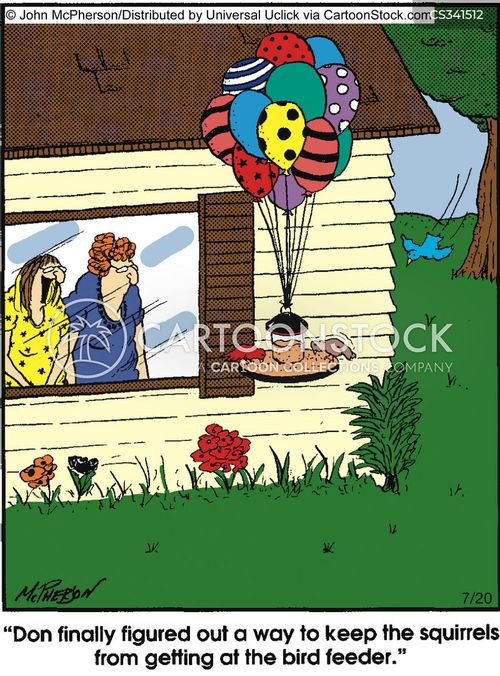
e. It does increase the local squirrel populations, unless action is taken to discourage them, such as using a squirrel proof feeder, as shown here:


or this


f. Increased disease transfer is possible, if the feeders are not kept clean. It is noted, though, that birds do often feed in mixed-species flocks anyways.

g. If you decide to feed, you must be consistent, as birds come to depend on it and change their feeding habits, especially during storms and other critical times.

To read the complete story, see:
http://www.birdwatchersdigest.com/bwdsite/learn/feeding/does-feeding-affect-behavior.php

According to the article, "Artificial Bird Feeding: What we don't know", studies conducted in the UK regarding artificial feeding, have found that Great and Blue Tits lay their eggs earlier and have a shortened incubation period. Surprisingly, they may also have smaller clutches and lower hatching success.

Also, artificial feeding may cause evolutionary changes, as seen with the Black Caps in the UK, splitting up into a new species, with one migrating normally and the other migrating only a short distance. A positive outcome for those birds, who overwinter, is being closer to their breeding grounds. (http://www.metrofieldguide.com/artificial-bird-feeding-what-we-dont-know/)

In conclusion, in trying to find a middle ground, I think, feeding during the hardest winter months
of January through March would be beneficial for our local birds.